
Description
Cannabis Edibles in Belgium: Laws, Regulations, Safety, and What Consumers Should Know
Cannabis products have attracted significant attention across Europe, and cannabis edibles in Belgium are frequently discussed because of growing public interest in alternative cannabis products. Edibles are different from smoked or vaporized cannabis because cannabinoids are consumed through food or drink rather than inhaled.
Understanding Belgian law is particularly important because cannabis regulations can differ depending on the substance involved, the concentration of cannabinoids, the intended use, and how a product is classified. Consumers should therefore avoid assuming that a product is legal simply because it is available online or sold in another European country.
This guide provides an educational overview of cannabis edibles in Belgium, including what edibles are, how they differ from other cannabis products, regulatory considerations, safety concerns, labeling, and the importance of checking current official information.
What Are Cannabis Edibles?
Cannabis edibles are foods or beverages containing cannabinoids derived from cannabis or hemp. They can take many forms, including baked goods, confectionery, beverages, capsules, and other preparations.
Unlike inhaled cannabis, edible products are processed through the digestive system. This creates important differences in how cannabinoids are absorbed and experienced.
The effects of an edible may take considerably longer to become noticeable than those associated with inhalation. This delayed onset is one reason consumers need to be particularly careful about consuming unknown or inaccurately labeled products.
When discussing cannabis edibles in Belgium, it is also essential to distinguish between products containing THC and products containing CBD. THC is associated with intoxicating effects, while CBD is generally considered non-intoxicating.
The Belgian Legal Framework
Belgian cannabis legislation is not simply a question of whether something contains cannabis. Different products can fall under different legal frameworks.
The legal status of cannabis edibles in Belgium depends on factors such as cannabinoid composition, THC concentration, product category, intended purpose, and applicable Belgian and European legislation.
Belgian authorities regulate cannabis and hemp products through several areas of law. These can include controlled-substance legislation, food regulations, medicines legislation, cosmetic regulations, and consumer-protection requirements.
Consequently, a product that is legally sold as a cosmetic or industrial hemp product should not automatically be assumed to be lawful when transformed into an edible.
THC and CBD: An Important Difference
Understanding THC and CBD is fundamental when researching cannabis edibles in Belgium.
THC, or tetrahydrocannabinol, is the cannabinoid primarily responsible for the intoxicating effects commonly associated with cannabis. Products containing significant amounts of THC can therefore raise substantially different legal and safety issues.
CBD, or cannabidiol, is another cannabinoid found in cannabis and hemp. It does not generally produce the same intoxicating effects as THC.
However, calling a product “CBD” does not automatically make it legal as a food. Food products containing cannabinoids can be subject to specific European and Belgian requirements.
Consumers should therefore consider the complete product classification rather than focusing on a single ingredient.
Why Edibles Are Different
One reason cannabis edibles in Belgium require careful consideration is that ingestion produces a different experience from inhalation.
When cannabis is inhaled, cannabinoids enter the bloodstream relatively quickly. With an edible, cannabinoids pass through the digestive system before reaching the bloodstream.
This can result in a delayed onset. A person may consume an edible and initially feel little or nothing, only to experience effects later.
This characteristic creates a potential risk of accidental overconsumption, particularly when the cannabinoid concentration is unknown or inaccurately labeled.
The Importance of Accurate Labeling
Reliable labeling is especially important for cannabis edibles in Belgium.
A legitimate packaged product should provide appropriate information about its ingredients, manufacturer, quantity, and intended use. Where cannabinoid content is legally required to be disclosed, consumers should be able to understand what the product contains.
Poorly labeled products create several problems. Consumers may not know how much cannabinoid they are consuming, whether the product contains THC, or whether other substances are present.
Consumers should be cautious with products that make unclear claims about cannabinoid concentrations or fail to provide adequate ingredient information.
Food Regulations
Food law is another important consideration when examining cannabis edibles in Belgium.
Food products must comply with applicable food-safety requirements. Depending on the ingredients and formulation, additional European rules may apply.
Certain cannabinoid-containing foods have been treated as novel foods within the European regulatory framework. This means that companies cannot necessarily manufacture and market them simply because similar products are available elsewhere.
Businesses considering cannabinoid-containing foods should verify authorization requirements before placing products on the Belgian market.
Medical Cannabis and Edibles
The subject of cannabis edibles in Belgium should also be separated from medical cannabis.
Medical products are regulated differently from ordinary consumer products. A medicine containing cannabinoids must meet requirements relating to quality, safety, manufacturing, authorization, and medical use.
Consumers should not assume that an edible marketed as “medical cannabis” has actually been approved as a medicine.
Medical decisions should be made with qualified healthcare professionals, particularly when cannabinoids are being considered alongside prescription medicines.
Potential Safety Concerns
Safety is another major issue associated with cannabis edibles in Belgium.
Because edible products can have delayed effects, accidental overconsumption is possible. The risk can be greater when products are homemade, illegally manufactured, incorrectly labeled, or obtained from unknown sources.
There is also a risk that children or pets could accidentally consume cannabis-containing foods if they are stored improperly.
Cannabis edibles should therefore never be treated like ordinary sweets or snacks. Products containing psychoactive cannabinoids should be kept securely away from children and animals.
Effects Can Vary
The effects associated with cannabis edibles in Belgium can vary substantially from person to person.
Factors can include individual metabolism, previous exposure to cannabinoids, the amount consumed, whether food was consumed at the same time, and the actual cannabinoid concentration.
Two products that appear similar on the outside can also have very different compositions.
This is another reason why consumers should not rely solely on appearance, product names, or informal recommendations when evaluating cannabinoid-containing foods.
Edibles and Alcohol
Combining cannabis products with alcohol can increase impairment and unpredictability.
Anyone considering cannabinoid consumption should understand that alcohol and intoxicating cannabinoids can affect judgment, coordination, and perception.
For this reason, combining substances can create additional risks, particularly when driving, cycling, operating machinery, or participating in activities requiring concentration.
Cannabis Edibles and Driving
Driving is a particularly important consideration when discussing cannabis edibles in Belgium.
THC can affect attention, reaction time, coordination, and judgment. Driving under the influence of an intoxicating substance can create serious safety and legal consequences.
The fact that an edible was consumed hours earlier does not necessarily establish that a person is safe or legally permitted to drive.
Anyone who intends to drive should understand the applicable Belgian rules and avoid driving when impaired.
Children and Accidental Consumption
Another concern surrounding cannabis edibles in Belgium is accidental consumption by children.
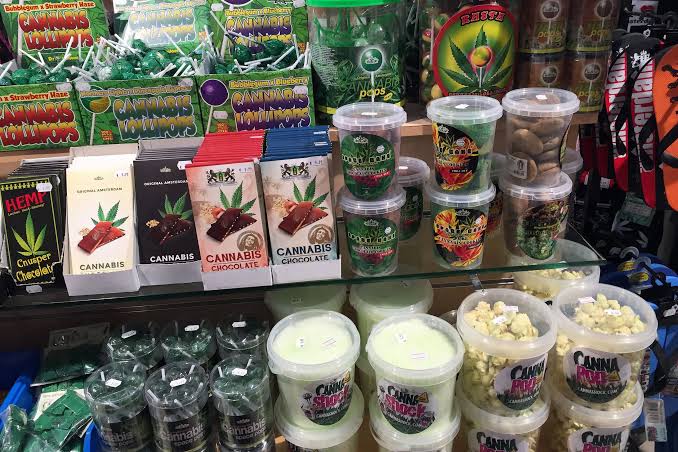
Edibles can resemble ordinary foods, especially when produced as candies, chocolates, biscuits, or drinks. Attractive packaging can increase the possibility that a child may mistake a cannabis-containing product for an ordinary snack.
Products containing cannabinoids should therefore be stored securely, clearly identified, and kept away from children.
If a child accidentally consumes a cannabis-containing product, immediate medical advice should be sought.
Pets and Cannabis Edibles
Pets can also be vulnerable to accidental cannabis exposure.
Dogs and cats may consume food containing cannabis if it is left unattended. Animals can respond differently to cannabinoids than humans, and ingestion can result in concerning symptoms.
Pet owners should keep cannabis-containing products securely stored and contact a veterinarian promptly if accidental ingestion occurs.
Buying and Selling: Why Compliance Matters
Businesses interested in cannabis edibles in Belgium need to understand that commercial activity involves substantially more responsibility than personal interest.
A company selling food products may need to comply with rules relating to food safety, labeling, ingredients, manufacturing, advertising, consumer protection, taxation, and business registration.
If a product contains controlled substances or is marketed with medical claims, additional regulations may apply.
Businesses should obtain professional legal and regulatory advice before introducing cannabinoid-containing products to the Belgian market.
Online Information Can Be Misleading
The internet contains large amounts of information about cannabis edibles in Belgium, but not all of it is reliable.
Websites may advertise products as “legal” without explaining the relevant Belgian restrictions. Social-media posts may also present personal experiences as though they were official legal guidance.
Consumers should distinguish between commercial marketing and authoritative information.
Belgian government agencies and European regulatory bodies are better sources for current legal and food-safety information.
Advertising and Health Claims
Another important consideration is how cannabinoid products are advertised.
Businesses should not make unsupported claims that a cannabis or CBD edible can cure diseases, replace medication, or guarantee particular medical outcomes.
Health claims can be regulated, particularly when a product is marketed as a food or medicine.
Responsible communication should clearly explain what the product is without misleading consumers about its effects or legal status.
Packaging and Product Presentation
Responsible packaging can reduce accidental consumption and improve transparency.
A properly presented product should clearly communicate relevant information and avoid creating the impression that a psychoactive product is ordinary candy.
Packaging should also avoid deliberately targeting children.
Manufacturers and retailers should consider consumer safety at every stage, from production and labeling to storage and distribution.
Travel and Cross-Border Issues
The legal situation surrounding cannabis edibles in Belgium becomes more complicated when international travel is involved.
Cannabis and cannabinoid regulations vary considerably between countries. A product that is permitted under one country’s rules may be prohibited in another.
Crossing an international border with cannabis-containing food can therefore create legal risks.
Travelers should check the laws of the departure country, destination country, and any transit countries before carrying cannabinoid products across borders.
The Future of Cannabis Regulation
The future of cannabis edibles in Belgium will likely continue to develop alongside broader European discussions about cannabis, hemp, CBD, food safety, and consumer protection.
Regulators are increasingly focused on product consistency, accurate labeling, public health, and preventing misleading claims.
Scientific research may also influence future policies as authorities obtain more information about cannabinoids and their potential applications.
However, regulatory change should not be assumed. Consumers and businesses should rely on current legislation rather than predictions about future legalization.
How Consumers Can Stay Informed
Anyone interested in cannabis edibles in Belgium should regularly check official sources for updates.
A good approach is to verify:
- The cannabinoid content of a product.
- Whether the product is classified as food, medicine, cosmetic, or another category.
- Whether the relevant product category is authorized for sale.
- Whether THC restrictions apply.
- Whether labeling requirements are satisfied.
- Whether health claims are permitted.
- Whether importing the product is lawful.
- Whether the product complies with current Belgian and European requirements.
This approach is more reliable than depending on social-media posts or retailer claims.
Responsible Consumer Awareness
The discussion surrounding cannabis edibles in Belgium should ultimately focus on informed decision-making and public safety.
Consumers should understand that cannabis, THC, CBD, hemp, medicines, and cannabinoid-containing foods are not interchangeable categories.
The same ingredient can be treated differently depending on how it is formulated and marketed. A hemp-derived ingredient used in an industrial product may be subject to different requirements from a cannabinoid added to food.
Understanding these distinctions helps consumers avoid confusion and potentially serious legal or health problems.
Conclusion
Cannabis edibles in Belgium are part of a complicated regulatory landscape involving cannabis legislation, food safety, consumer protection, and European rules. Edibles differ from inhaled cannabis because cannabinoids are processed through the digestive system, creating different timing and safety considerations.
Consumers should pay close attention to product composition, labeling, THC content, intended use, and current legal requirements. Businesses should obtain appropriate regulatory advice before manufacturing, importing, advertising, or selling cannabinoid-containing foods.
Most importantly, the availability of a product online does not necessarily mean that it is legal to sell or possess in Belgium. Regulations can also change over time.
Anyone seeking current information about cannabis edibles in Belgium should consult authoritative Belgian and European sources rather than relying exclusively on commercial websites or social-media discussions. Staying informed is the safest way to understand the evolving relationship between cannabis products, consumer markets, and Belgian law.


Reviews
There are no reviews yet.